

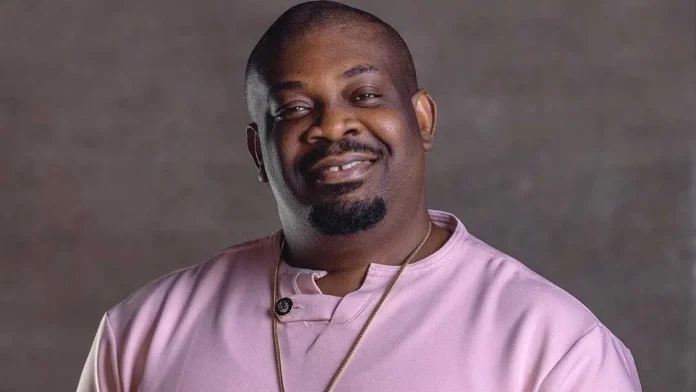
Nigerian music executive and producer Don Jazzy has said Afrobeats artists and producers created some of their best music during the period they lived together in record label houses equipped with studios and creative spaces.
Speaking during a recent episode of the Crea8torium podcast, the Mavin Records boss reflected on the early days of the Mo’Hits era and how constant interaction among artists inspired spontaneous creativity.
According to him, many classic Afrobeats songs were born from ordinary moments and conversations within the house.
Don Jazzy recounted how a disagreement involving D’Prince at the Mo’Hits mansion eventually inspired D’banj’s popular song “Olorun Maje.”
“I have a theory that says that most of the great music that we made in Afrobeats was when all of us were living together,” he said.
He explained that their former manager, Sunday Are, had complained that D’Prince refused to attend radio interviews.
According to him, after the matter was reported to D’banj, the singer angrily confronted D’Prince before he later walked back into the studio where Don Jazzy was working.
“D’Prince now came back into the studio where I was with Sunday Are and pretended like he was dusting some equipment and then began to sing, ‘Some people they want make I cry, some people they want make I die, why? Olorun Maje oooo,’” he recalled.
Don Jazzy said the lyrics immediately blended perfectly with the beat he was producing at the time, leading to the creation of the song.
“That was how the song was born,” he added.
The producer also shared how another song, “You bad, you want it,” emerged after Dr SID casually entered the studio and started freestyling over a beat he was making.
Reflecting on the current state of music production, Don Jazzy noted that music creation today is different from the collaborative atmosphere that existed during the early Afrobeats era.
However, he stated that he still maintains his old creative process by entering the studio with a specific artist in mind while making beats.
He also encouraged younger creatives to collaborate more frequently and build stronger relationships within the industry to improve creativity and cohesion.
