

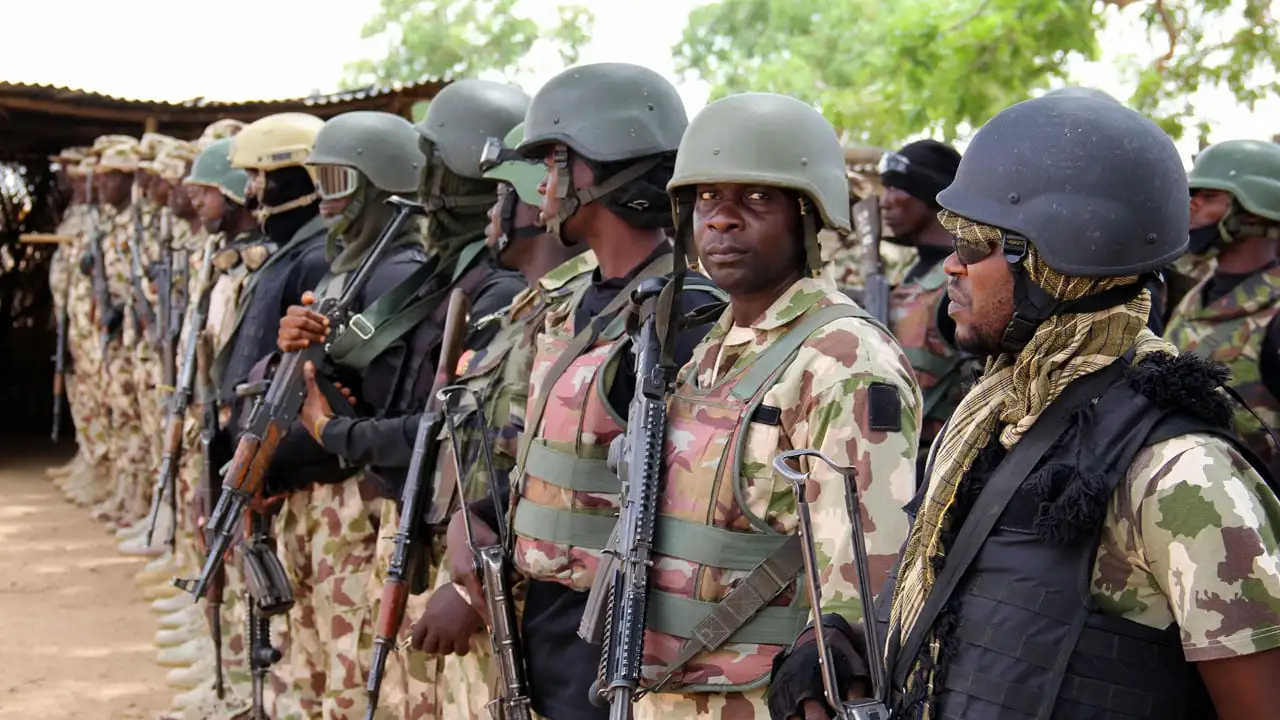
The National Initiative for Peace and Security (NIPS) has commended the Armed Forces of Nigeria for what it described as significant operational successes across multiple regions of the country in the first quarter of 2026.
The organisation made this known in its quarterly report on Nigeria’s security situation, released on Monday by its Executive Director, Adams Kings.
The report highlighted intensified military operations that resulted in the neutralisation of over 200 terrorists, the arrest of nearly 300 suspects, and the rescue of approximately 188 kidnapped civilians in April alone.
According to the report, these achievements were recorded across various regions, including the North-East, North-West, North-Central, South-South, and South-East, reflecting improved coordination among security agencies and enhanced operational capacity.
“The Armed Forces have demonstrated a significant increase in operational tempo across the country. These outcomes reflect a more aggressive and coordinated approach that targets both the combat and support structures of criminal networks,” the NIPS report stated.
It further noted that the operations were not confined to a single theatre but carried out nationwide, indicating a more strategic and unified approach to tackling insecurity.
“In the North-East, sustained offensives have continued to degrade insurgent strongholds with the killing of over 130 terrorists. Similar disruptions were recorded in the North-West through bandit neutralisation and victim rescues,” it added.
The report also emphasised a shift in strategy, highlighting efforts to dismantle the underlying support systems of criminal networks, including the destruction of camps, illegal arms manufacturing sites, and logistics channels.
According to NIPS, this approach is aimed at weakening the long-term operational capacity of such groups, particularly in asymmetric warfare environments.
“Rescues of women, children, farmers, and other civilians have restored dignity to affected communities and reinforced public trust in state institutions,” the report added.
“Operations also adhered to rules of engagement and international humanitarian standards, helping to maintain legitimacy,” NIPS said.
Despite these gains, the organisation raised concerns about what it described as the politicisation of security efforts by some political actors.
“While democratic systems thrive on debate and dissent, NIPS notes with concern that certain political actors have adopted narratives that undermine the morale of security forces and distort public perception of ongoing efforts.
“Some elements within the political space have engaged in conduct that inadvertently strengthens the propaganda of terrorist and criminal groups.
“This includes dismissing verifiable military gains, amplifying fear without context, and framing national security challenges solely as tools for political contestation,” NIPS added.
The group warned that such actions could have unintended consequences, including boosting the confidence of criminal elements.
It stressed that when national security becomes entangled in political rivalry, both civilians and frontline personnel bear the consequences.
While acknowledging progress, NIPS noted that security challenges persist, as criminal groups continue to adapt, exploit difficult terrain, and leverage local grievances.
To sustain momentum, the organisation recommended continued offensive operations, increased investment in intelligence gathering, and stronger collaboration between security forces and local communities.
