

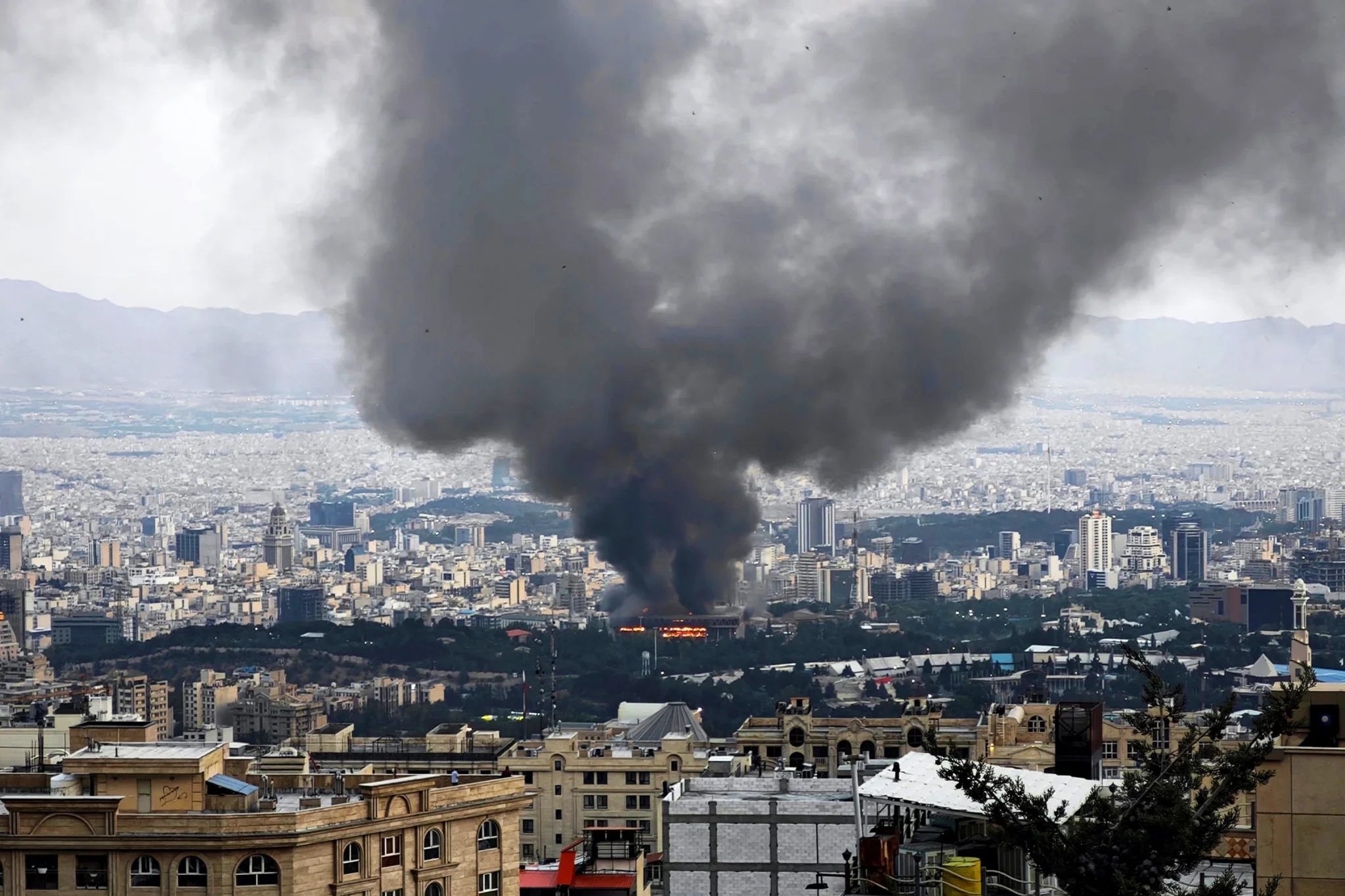
Iran launched missile strikes on Tel Aviv, Israel, on Tuesday night, reportedly using cluster warheads in retaliation for the assassination of its security chief, Ali Larijani.
Iranian state television confirmed the development on Wednesday, stating that the attack killed two people in a neighbourhood near the densely populated city, which also hosts key military installations. This brings the total number of deaths in Israel since the conflict began to at least 14.
In a statement, Iran’s Islamic Revolutionary Guard Corps said the weapons deployed included Khorramshahr-4 and Qadr missiles, both equipped with multiple warheads.
Meanwhile, Israel has accused Iran of repeatedly deploying cluster munitions, which release numerous smaller explosives mid-air, spreading across a wide area and making interception more difficult.
In a related development, a projectile struck an area close to the Bushehr nuclear power plant in Iran on Tuesday evening, although authorities said it caused no damage or casualties. Iran communicated this to the International Atomic Energy Agency (IAEA).
IAEA Director-General Rafael Grossi renewed his call for maximum restraint amid the ongoing conflict to reduce the risk of a nuclear incident.
Israel and the United States have maintained that one of the objectives of their military operations, launched more than two weeks ago, is to prevent Iran from developing a nuclear weapons programme. The strikes reportedly resulted in the death of the country’s supreme leader and several other top officials.
The Iranian government on Tuesday confirmed the killing of Larijani, describing him as the most senior figure targeted since the first day of the US-Israeli campaign, when an Israeli strike reportedly killed Iran’s Supreme Leader, Ayatollah Ali Khamenei.
Iran’s Supreme National Security Council, previously headed by Larijani, also disclosed that his son and his deputy, Alireza Bayat, were killed in an Israeli attack on Monday night.
