

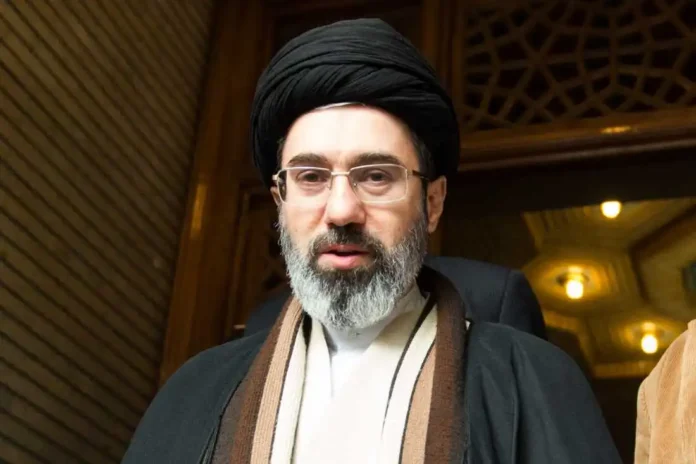
Iran’s newly appointed Supreme Leader, Mojtaba Khamenei, issued a significant directive on Thursday, ordering the continued closure of the Strait of Hormuz and demanding the immediate shutdown of all United States military bases across the Middle East.
This move has predictably heightened tensions with Washington and its allies in the region.
In his first official decree since taking over from his father, Ali Khamenei—who Iran claims was killed in a joint U.S.-Israeli strike—Mojtaba Khamenei conveyed his message via the Iranian state television outlet, Press TV.
The new supreme leader characterized the ongoing closure of the vital waterway as a “tool of pressure” against Western powers. He also issued a stern warning to neighboring countries that currently host American troops, urging them to promptly close these facilities.
He further declared that any base utilized to facilitate “aggression” against Iran would be considered a legitimate target for the Islamic Revolutionary Guard Corps (IRGC).
“The countries of the region must clarify their stance regarding the aggressors against our dear homeland,” the statement emphasized.
“I recommend that they shut down those bases as soon as possible, for they must surely have realised by now that America’s claim of establishing security and peace has been nothing but a lie.”
Khamenei also pledged that Iran would seek reparations for those affected by the conflict, specifically referencing a recent strike on a school in Minab. He cautioned that if compensation is not provided, Iran would confiscate or destroy an equivalent amount of what he termed enemy assets.
Concurrently, Iranian President Masoud Pezeshkian presented a three-point diplomatic strategy aimed at ending the hostilities, following discussions with leaders from Russia and Pakistan.
Pezeshkian stated that the conflict, which Iran attributes to the “Zionist regime and the US,” could only conclude if the international community acknowledges Iran’s rights, compensates for damages to its infrastructure and civilians, and offers concrete assurances against future attacks.
