

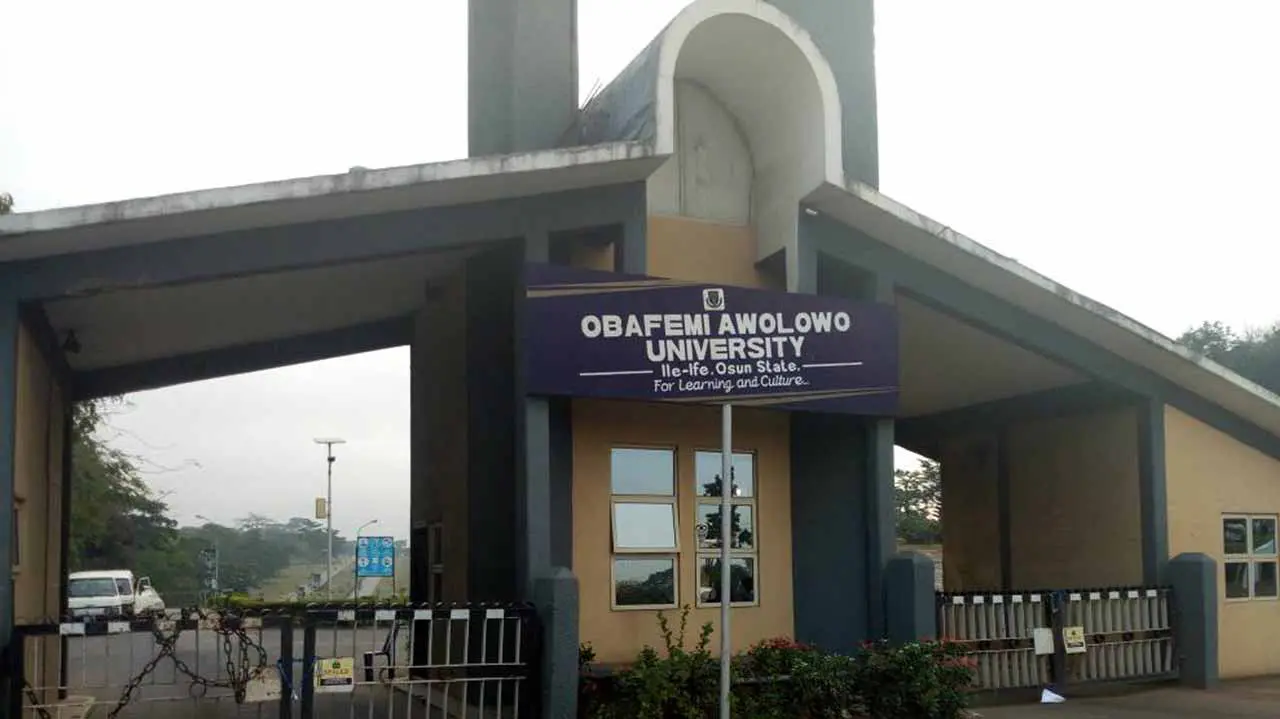
Academic activities at Obafemi Awolowo University (OAU) are expected to be disrupted following a planned 72-hour lecture boycott by students protesting recent changes to the institution’s transportation system.
The boycott, scheduled to take place from Tuesday, April 14 to Thursday, April 16, 2026, was confirmed by the Students’ Union Government after a congress held on April 9, where students deliberated on ongoing mobility challenges on campus.
In a statement jointly signed by the union president, Adelani David, and the secretary-general, Habeeb Oke, the leadership directed all students to withdraw from lectures during the protest period.
“The union shall embark on a total 72-hour lecture boycott starting from Tuesday, 14th April 2026, to Thursday, 16th April 2026. All academic activities are to be boycotted throughout this period,” the statement read.
The protest is centred on a recently introduced transport restructuring policy, which followed the donation of buses and tricycles intended to enhance mobility within the university. The initiative, reportedly supported by Oluremi Tinubu, led to a restriction on intra-campus transport operations, limiting them to the newly provided vehicles.
However, students have expressed dissatisfaction with the implementation, stating that the new system has created operational challenges, including delays, overcrowding, and inadequate coverage of key routes.
According to union representatives, the current arrangement has significantly reduced the efficiency of movement across campus, particularly during peak academic hours when demand for transportation is highest.
“The transportation system as presently operated has led to long queues, insufficient vehicles, and extended waiting times,” the union noted.
Students living off-campus are said to be among the most affected, as the restructuring has reduced alternative transport options and increased commuting costs.
The union also raised concerns over the exclusion of former commercial transport operators, who previously supplemented campus mobility.
Despite a series of engagements with university management, students said their concerns remain largely unresolved, with authorities describing the situation as part of a transitional adjustment phase.
According to the union, the university management has indicated plans to introduce additional buses to ease the pressure, though these measures are yet to take effect.
Among the demands put forward by the students are the immediate deployment of more vehicles, the temporary reinstatement of previous transport options, and broader consultation in future policy decisions.
The union stated that it would review the situation at the end of the boycott and warned that further actions, including a mass protest, could be taken if their demands are not addressed.
