

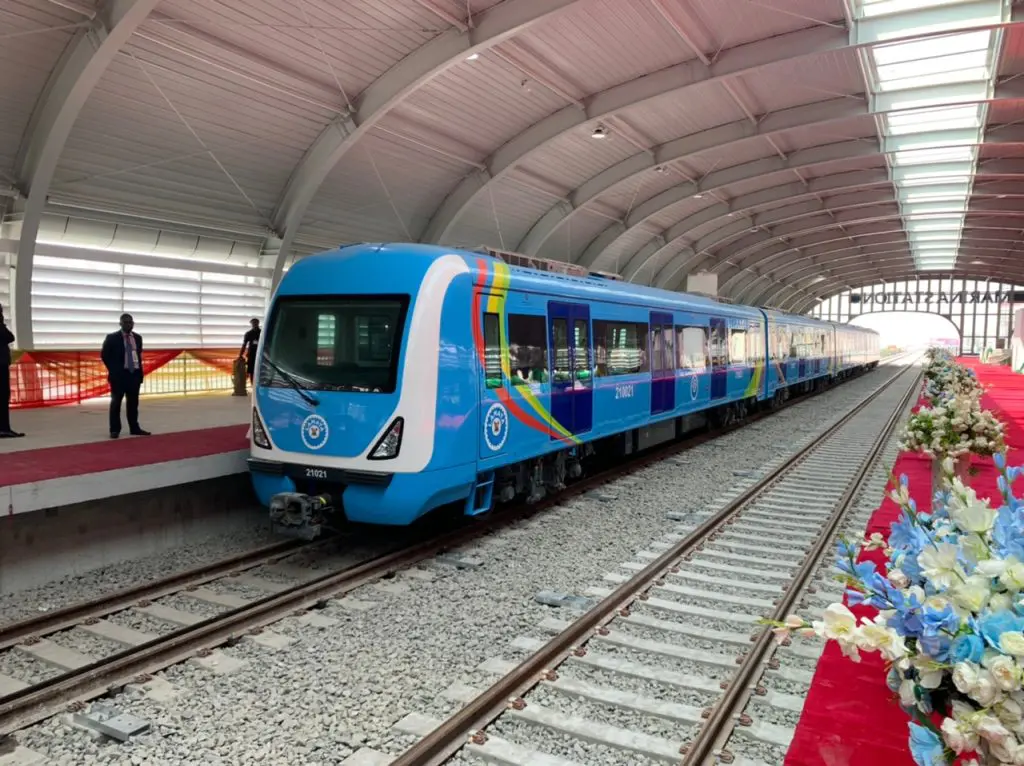
The Managing Director of the Nigerian Railway Corporation, Kayode Opeifa, has initiated a fresh push to strengthen Nigeria’s transport and logistics network by constituting a committee tasked with accelerating the connection between seaports and railway systems across the country.
Opeifa made this known during a quarterly stakeholders’ engagement organised by the Nigerian Ports Consultative Council, where industry players from both maritime and rail sectors gathered to discuss strategies for improving coordination and efficiency.
He emphasised that achieving seamless rail-port connectivity is critical to unlocking the full potential of Nigeria’s freight and logistics ecosystem. According to him, reforms in the maritime sector and the development of deep-sea ports will continue to deliver limited results without efficient rail linkages to support cargo movement.
While acknowledging the level of collaboration already established between the NRC and port authorities, Opeifa noted that more work is needed to optimise the transportation of goods, particularly from major hubs such as Lagos and ports in the eastern corridor to inland destinations.
He pointed out that persistent bottlenecks in cargo movement remain a major challenge and called for deliberate efforts to improve operational systems, reduce delays, and enhance overall efficiency.
Opeifa stressed that transforming freight movement through rail is key to building a more reliable and cost-effective logistics network. He also highlighted the importance of integrating ports in the eastern region, revealing plans to introduce new rail lines that will boost trade and improve connectivity across regions.
Providing updates on ongoing infrastructure projects, he disclosed that the Kaduna-Kano rail corridor is approaching completion. He further explained that the federal government is actively working to connect existing rail lines directly to ports in order to ease cargo evacuation and reduce congestion in port areas.
“The Federal Government has approved many plans, including the Lagos-Ibadan standard gauge line extension from the Apapa Port to the Tincan Island port, while on the central line, the Warri-Itakpe would connect the Warri Port.
“On the Eastern flank, similar thing would happen on the Narrow Gauge as the line is expected to be connected to the Port-Harcourt Port at Onne, just as approval has been given to connect the Lagos-Kano on the Western flank to the Baro Port on the narrow gauge, he said.”
The NRC boss also disclosed plans for a new rail project linking the Lekki Deep Sea Port through Ijebu-Ode and Sagamu to Kajola, where it will connect with the Lagos-Ibadan railway line. He indicated that the project is expected to commence within the year.
He maintained that linking all Nigerian ports by rail remains one of the most effective ways to boost economic growth, urging stakeholders including truck operators not to undermine the initiative but instead support it as part of a broader, integrated transport system.
Opeifa further called for an expansion of freight yards along both narrow and standard gauge lines to increase cargo handling capacity and improve efficiency across the logistics chain.
