

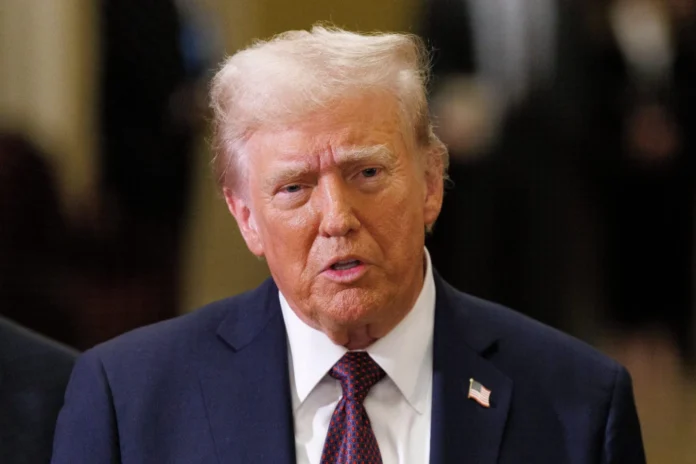
Donald Trump has issued a stark warning, suggesting that the future of the North Atlantic Treaty Organization (NATO) could be jeopardized if member states fail to support efforts to reopen the Strait of Hormuz, which has been disrupted amid the ongoing Middle East conflict.
Speaking in an interview with the Financial Times on Sunday, Trump indicated that the alliance could face severe repercussions if U.S. allies do not assist in securing the vital waterway. This strait, a major global oil transit route, has been effectively shut down by Iran during the escalating hostilities in the region.
“If there’s no response or if it’s a negative response I think it will be very bad for the future of NATO,” Trump stated.
The closure of this strategic shipping corridor has not only disrupted global energy supplies but has also triggered a sharp increase in oil prices worldwide.
Trump drew a parallel, noting that just as the United States has provided assistance to Ukraine in its conflict with Russia, European allies should also play a role in helping to secure the strait and restore normal maritime traffic.
The U.S. president, who has previously criticized NATO members for their heavy reliance on American support, asserted that countries benefiting most from oil shipments through the Gulf should assume greater responsibility for protecting the route.
“It’s only appropriate that people who are the beneficiaries of the Strait will help to make sure that nothing bad happens there,” he said.
Trump also hinted that a planned summit in Beijing with Xi Jinping might be postponed, as Washington seeks Beijing’s cooperation in addressing the crisis and reopening the strait.
“We’d like to know before,” he remarked, pointing out that China and several European nations are more heavily dependent than the United States on oil shipments passing through the Gulf.
In a separate comment to reporters aboard Air Force One, Trump disclosed that the United States was already engaged in discussions with approximately seven countries to help ensure the safe reopening of the Strait of Hormuz.
 could be jeopardized if member states fail)