

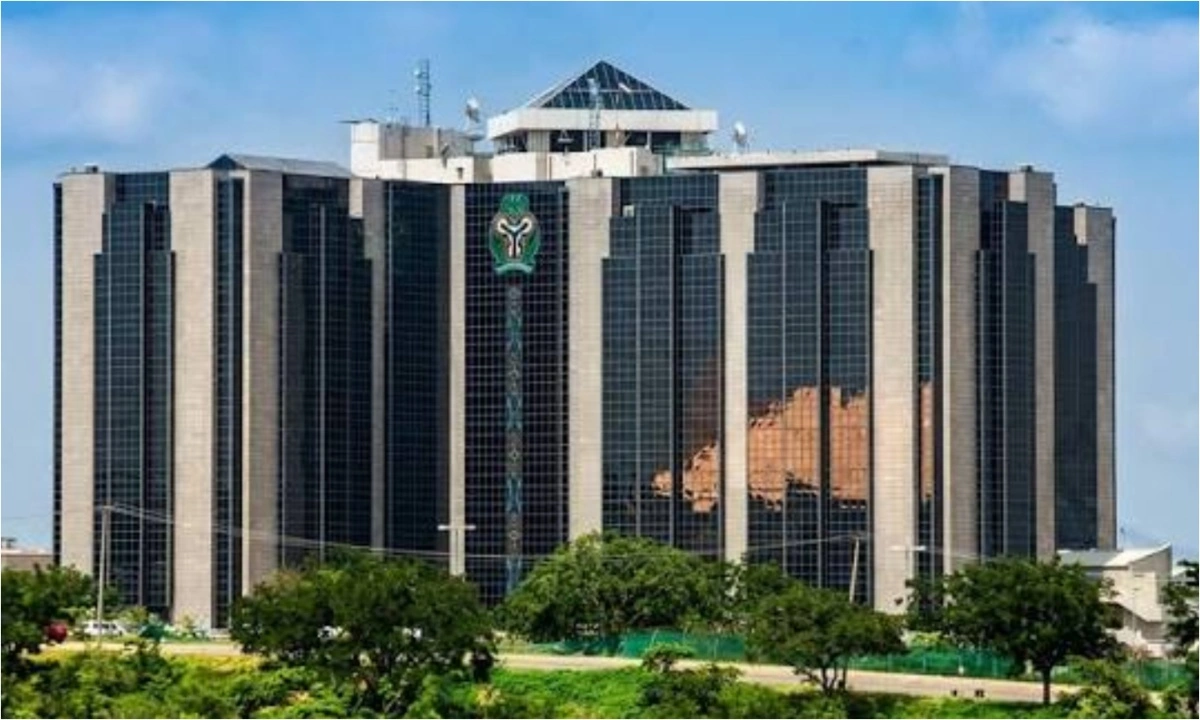
The Central Bank of Nigeria (CBN) has instructed banks to perform a thorough stress test on their credit portfolios starting April 1, 2026, as part of an effort to maintain the stability of the country’s banking sector.
An official at the central bank confirmed to Vanguard that this mandate was sent via a letter to the Chief Executive Officers of various banks, though the document was intended for internal use rather than public distribution.
The source noted that the directive is a standard part of regulatory oversight designed to bolster the financial system’s ability to withstand shocks.
The central bank pointed out that the move is in line with Sections 13 and 63 of the Banks and Other Financial Institutions Act 2020, which grants the CBN the authority to ensure banks hold enough capital to cover potential risks from their activities.
The CBN stated in the letter: “This is without prejudice to the contents of the CBN ‘Guideline on Stress Testing for Nigerian Banks’ issued in March 2019.”
It further clarified that banks must evaluate how their loan portfolios would hold up over a one-year period under simulated difficult economic conditions.
According to the apex bank: “Banks are expected to stress the resilience of their credit portfolio over a 12-month period by simulating deterioration in asset quality, governance risk and significant change in industry dynamics such as fall in commodity prices, foreign exchange rate movement, structural shift in obligor operating market dynamics (supply chain disruption, contracting demand, etc.), portfolio variables, among others.”
The CBN mentioned that the goal of this exercise is to gauge how such adverse conditions might affect banks’ Non-Performing Loans (NPLs), their provisions for loan losses, and their Capital Adequacy Ratio (CAR).
Regarding the process, the bank directed lenders to apply the stress test to all credit exposures—both those on and off the balance sheet—including loans related to directors and insiders, while assuming a step-by-step decline in risk classification as per the July 2020 guidelines.
The CBN also noted that banks need to define a starting point, or baseline, for the test.
It said: “However, where a bank’s FinA returns indicates a deterioration in specific exposures as at stress testing date, these should be adopted as the baseline amount and performance status.”
The regulator added: “In addition to classification of credit portfolio across performing, watchlist (specialized loans), substandard, doubtful and lost, baseline position shall include exposure at default, current provisioning level, collateral value and risk weighted position.”
According to the central bank, the main stress scenario should involve a steady decline in the credit portfolio over a 12-month span.
It also specified that sectors showing signs of weakness should be subject to higher provisioning requirements.
The CBN stated: “Where there are signs of potential deterioration in industry dynamics, exposures shall be further stressed and deteriorated with at least an additional 10 percent provisioning applied.”
On the topic of loans to insiders, the regulator noted: “Director/Insider-Related Credits: To appropriately address governance and insider-related risks, all insider-related exposures shall be treated under a severe stress assumption and assumed to be in default. These shall be fully provided for in the banks’ stress scenarios.”
Once the exercise is complete, banks are required to report how the stress test has impacted their overall capital.
According to the CBN: “Following the conclusion of stress testing, banks are expected to report: pre-stress CAR, post-stress CAR, and capital shortfall (if any).”
The apex bank added: “It is pertinent to note that banks shall be required to raise 100% of their reported stressed capital shortfall or 50% of the shortfall computed from CBN stress analysis of the banks (whichever is higher), within an 18-month period.”
The regulator also mentioned: “Once communicated, this level of capital shall become the risk-based capital requirement of the bank until the next cycle of stress testing, which would take place six months after the end of the capital raise to close the shortfall in stressed CAR.”
For banks that do not show a capital deficit, the CBN noted: “For all banks without a shortfall in CAR from the stress-testing exercise, a cycle of 12-month stress testing will apply.”
The central bank has set a deadline of April 30 for all lenders to submit their board-approved stress-testing reports.
 has instructed banks to perform a thorough stress test on their credit portfolios starting April 1, 2026, as part of an effort)